Why recoat
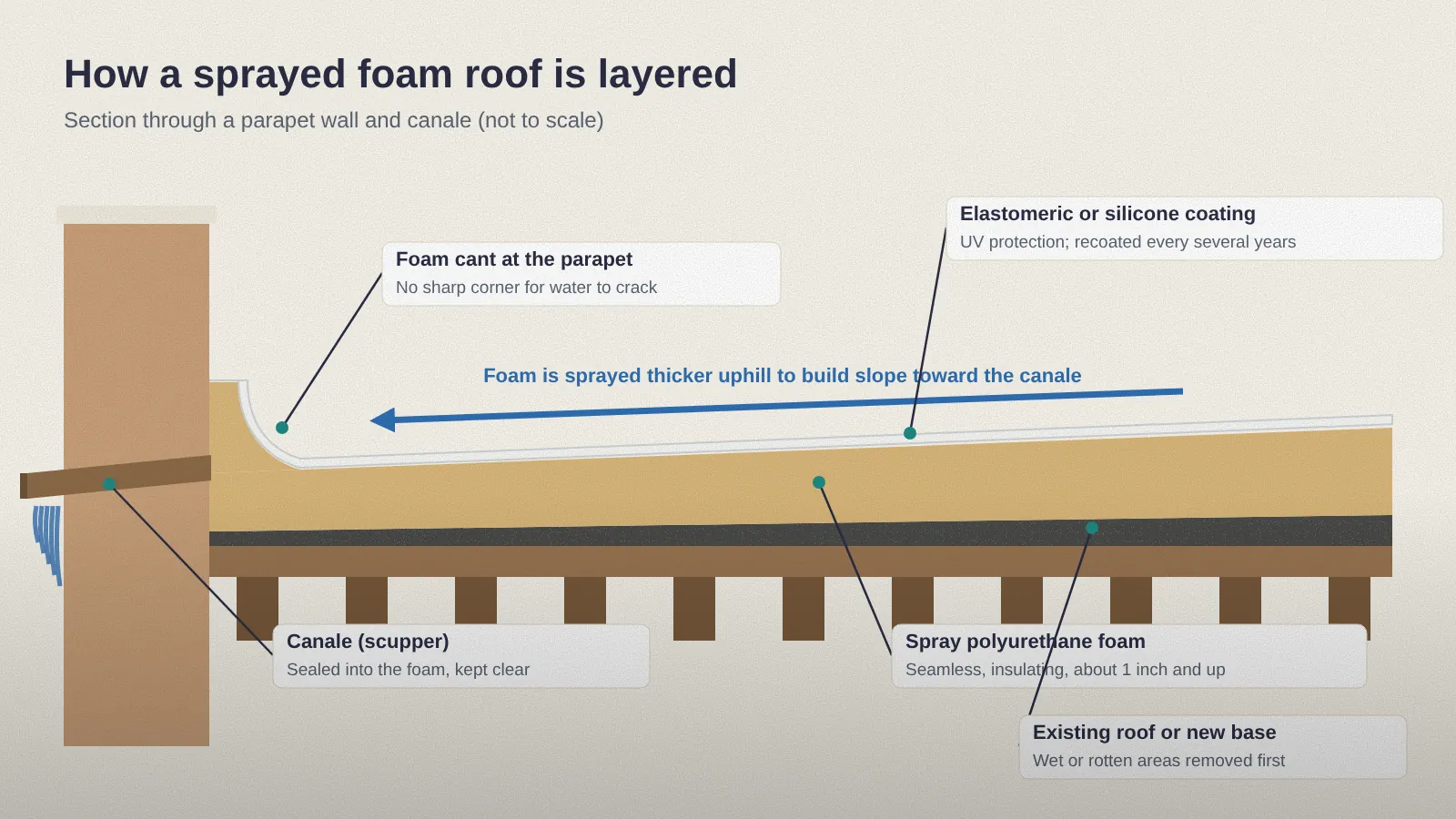
A coating is a thick, flexible skin over the foam or membrane. It blocks UV, sheds water and reflects heat. At Placitas elevations the sun is strong, and coatings thin out over the years. When it's gone, the foam underneath starts to break down.
Time to recoat when you see
- Coating that rubs off chalky
- The tan color of foam showing through
- Fine cracking across the surface
- Peeling at parapets, canales or curbs
- Bird-pecked or scuffed spots
How we recoat
- Walk the roof and mark every problem area
- Cut out and replace damaged foam; repair membranes
- Clean off dust, sand and debris — there's a lot of it on windy hillsides
- Seal parapets, canales, skylights and penetrations
- Apply coating to the specified thickness
Choosing the coating
Acrylic, silicone and other coatings each have strengths. If your roof feeds a rainwater cistern, we'll choose a product suited to that use.
Questions homeowners ask
How often should I recoat?
Every several years, depending on the coating type and thickness. A yearly look tells you when.
Can I recoat over any old coating?
Not always — some coatings only accept the same type. We check what's there first.
Is the roof walkable after?
Once cured, for normal maintenance.