What it is
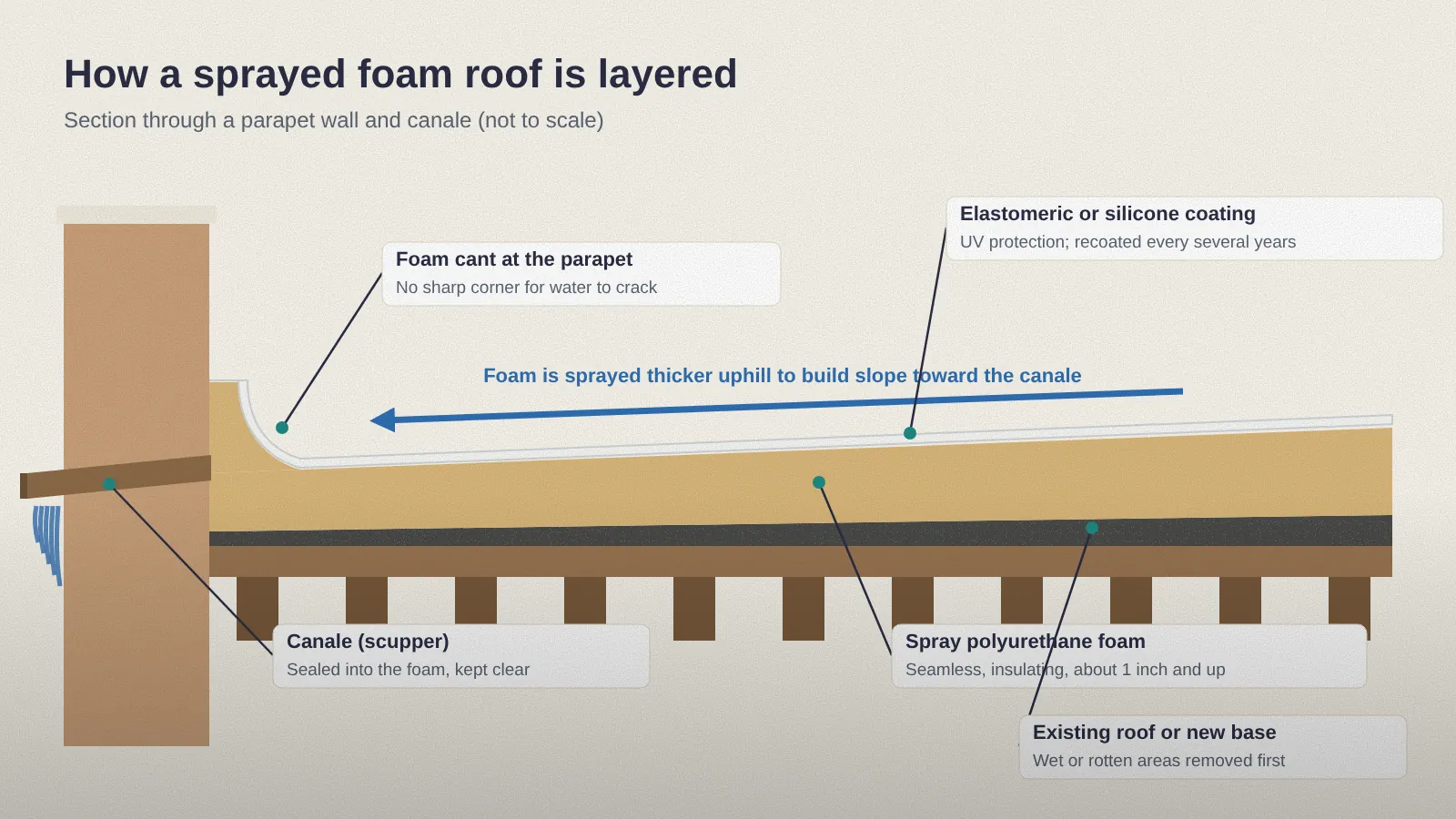
Sprayed polyurethane foam is mixed at the spray gun and expands into a firm, closed-cell layer that bonds to the roof below. Because it's sprayed, it follows every curve, corner and parapet with no seams. A coating goes on top to protect it from the sun.
Why it fits here
- Complex roofs. Multiple levels, curved parapets and lots of penetrations are easier to seal with foam.
- Insulation. Adds R-value right where the sun hits.
- Slope. Sprayed thicker to move water to the canales.
- Wind. Fully bonded, with no loose edges for wind to grab.
Spray days matter
Foam needs a dry surface and calm conditions. In Placitas, wind is the main scheduling challenge — overspray can drift on a breezy day — so we pick spray days carefully and protect cars, windows and neighbors' property.
Keeping it healthy
The coating is the part that wears. Inspect it every year and recoat before the foam is exposed. See how long a foam roof lasts.
Questions homeowners ask
What about overspray on a windy day?
We don't spray in conditions that would carry it, and we mask and cover what's nearby.
How thick is the foam?
Typically an inch or more, with extra thickness where slope is needed.
Can foam go over my old roof?
If the old roof is dry and firmly attached, often yes.